
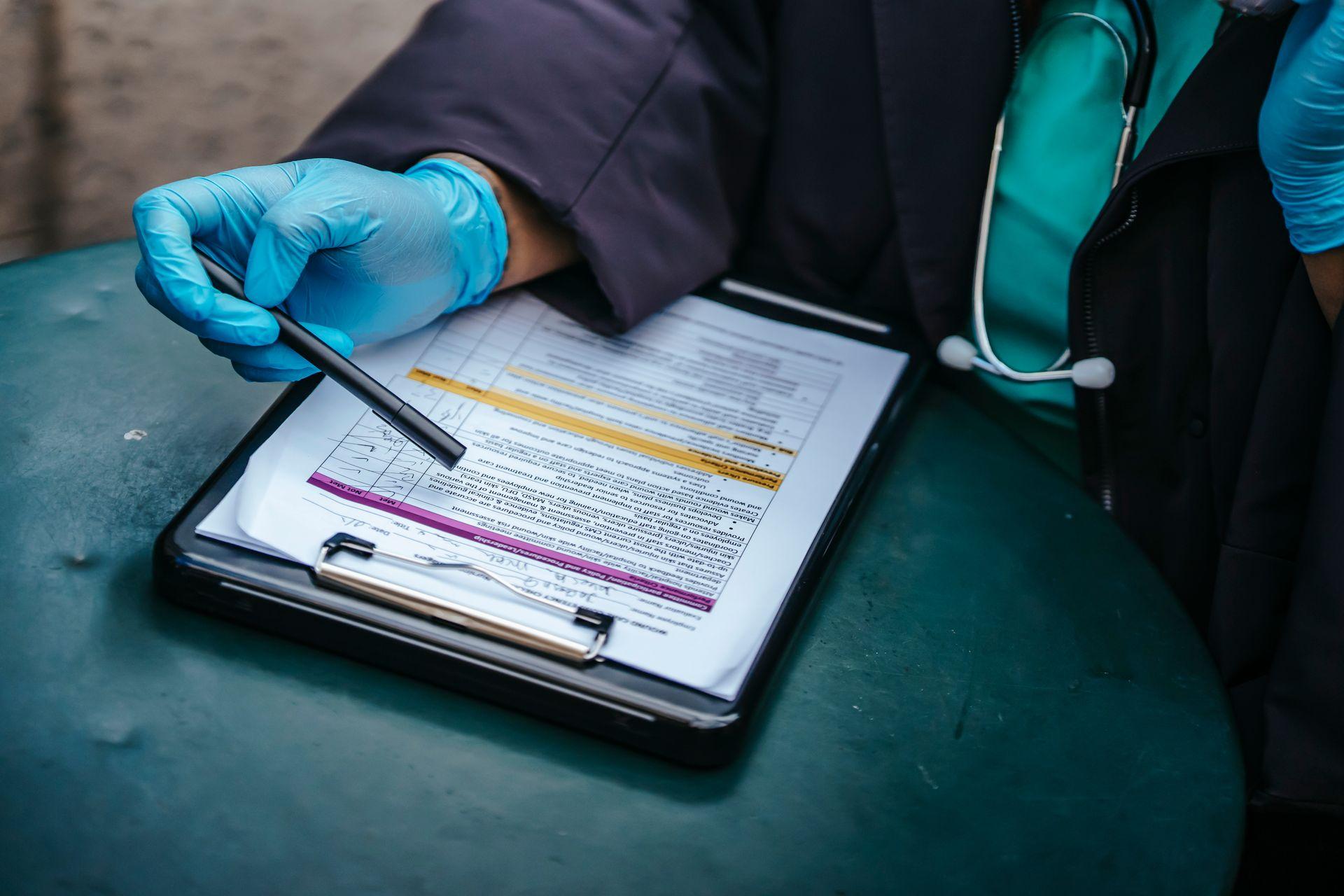
AI Healthcare · AI CERTs®
AI+ Doctor Practitioner™
Redefining Healthcare with AI-Driven Diagnosis

Code AP 1101
Formerly AI+ Doctor™
- Duration
- Instructor-Led: 1 day (live or virtual)
- Self-Paced: 8 hours of content
- Exam
- 50 questions, 70% passing, 90 minutes, online proctored exam
- Includes
- Instructor-led OR Self-paced course + Official exam + Digital badge
- Track
- Professional
AI CERTs® digital credential
Code AP 1101
Formerly AI+ Doctor™
Certification overview
- Clinical Intelligence Focus: Designed for medical professionals to integrate AI into patient care and diagnostics
- Data-Driven Decisions: Equips doctors with tools to interpret AI-generated insights for precise treatment planning
- Comprehensive Medical AI Knowledge: Covers AI applications from predictive analytics to medical imaging and virtual health
- Future-Ready Expertise: Empowers healthcare practitioners to lead AI-driven innovations in clinical practice
Prerequisites
Basic medical knowledge, Familiarity with healthcare systems, Interest in technology integration, Data literacy, Problem-Solving mindset
Certification modules
9 modules from the official AI CERTs curriculum. Select a module to see its topics.
01What is AI for Doctors?
- 1.1 From Decision Support to Diagnostic Intelligence
- 1.2 What Makes AI in Medicine Unique?
- 1.3 Types of Machine Learning in Medicine
- 1.4 Common Algorithms and What They Do in Healthcare
- 1.5 Real-World Use Cases Across Medical Specialties
- 1.6 Debunking Myths About AI in Healthcare
- 1.7 Real Tools in Use by Clinicians Today
02AI in Diagnostics & Imaging
- 2.1 Introduction to Neural Networks: Unlocking the Power of AI
- 2.2 Convolutional Neural Networks (CNNs) for Visual Data: Seeing with AI’s Eyes
- 2.3 Image Modalities in Medical AI: AI’s Multi-Modal Vision
- 2.4 Model Training Workflow: From Data Labeling to Deployment – The AI Lifecycle in Medicine
- 2.5 Human-AI Collaboration in Diagnosis: The Power of Augmented Intelligence
- 2.6 FDA-Approved AI Tools in Diagnostic Imaging: Trust and Validation
03Introduction to Fundamental Data Analysis
- 3.1 Understanding Clinical Data Types – EHRs, Vitals, Lab Results
- 3.2 Structured vs. Unstructured Data in Medicine
- 3.3 Role of Dashboards and Visualization in Clinical Decisions
- 3.4 Pattern Recognition and Signal Detection in Patient Data
- 3.5 Identifying At-Risk Patients via Trends and AI Scores
- 3.6 Interactive Activity: AI Assistant for Clinical Note Insights
04Predictive Analytics & Clinical Decision Support – Empowering Proactive Patient Care
- 4.1 Predictive Models for Risk Stratification – Sepsis and Hospital Readmissions
- 4.2 Logistic Regression, Decision Trees, Ensemble Models
- 4.3 Real-Time Alerts – Early Warning Systems (MEWS, NEWS)
- 4.4 Sensitivity vs. Specificity – Metric Choice by Clinical Need
- 4.5 ICU and ER Use Cases for AI-Triggered Interventions
05NLP and Generative AI in Clinical Use
- 5.1 Foundations of NLP in Healthcare
- 5.2 Large Language Models (LLMs) in Medicine
- 5.3 Prompt Engineering in Clinical Contexts
- 5.4 Generative AI Use Cases – Summarization, Counselling Scripts, Translation
- 5.5 Ambient Intelligence: Next-Gen Clinical Documentation
- 5.6 Limitations & Risks of NLP and Generative AI in Medicine
- 5.7 Case Study: Transforming Clinical Documentation and Enhancing Patient Care with Nabla Copilot
06Ethical and Equitable AI Use
- 6.1 Algorithmic Bias – Race, Gender, Socioeconomic Impact
- 6.2 Explainability and Transparency (SHAP and LIME)
- 6.3 Validating AI Across Populations
- 6.4 Regulatory Standards – HIPAA, GDPR, FDA/EMA Compliance
- 6.5 Drafting Ethical AI Use Policies
- 6.6 Case Study – Biased Pulse Oximetry Detection
07Evaluating AI Tools in Practice
- 7.1 Core Metrics: Understanding the Basics
- 7.2 Confusion Matrix & ROC Curve Interpretation
- 7.3 Metric Matching by Clinical Context
- 7.4 Interpreting AI Outputs: Enhancing Clinical Decision-Making
- 7.5 Critical Evaluation of Vendor Claims: Ensuring Reliability and Effectiveness
- 7.6 Red Flags in Commercial AI Tools: Recognizing and Mitigating Risks
- 7.7 Checklist: “10 Questions to Ask Before Buying AI Tools”
08Implementing AI in Clinical Settings
- 8.1 Identifying Department-Specific AI Use Cases
- 8.2 Mapping AI to Workflows (Pre-diagnosis, Treatment, Follow-up)
- 8.3 Pilot Planning: Timeline, Data, Feedback Cycles
- 8.4 Team Roles – Clinical Champion, AI Specialist, IT Admin
- 8.5 Monitoring AI Errors – Root Cause Analysis
- 8.6 Change Management in Clinical Teams
- 8.7 Example: ER Workflow with Triage AI Integration
- 8.8 Scaling AI Solutions Across the Healthcare System
- 8.9 Evaluating AI Impact and Performance Post-Deployment
09Optional Module: AI+ Doctor Practitioner Agents
- 1.1 What Are AI Agents?
- 1.2 How Does an AI Agent Work in Healthcare?
- 1.3 Core Characteristics of AI Agents
- 1.4 Importance of AI Agents (General + Healthcare)
- 1.5 Significance of AI Agents in Healthcare
- 1.6 Types of AI Agents
- 1.7 Applications and Trends in Healthcare
- 1.8 Case Study – AI Agents for Healthcare Data Unification
Why this certification matters
Enhances Diagnostic Precision:
Gain tools to support faster, more accurate diagnoses using AI algorithms trained on vast clinical data.
Bridges Medicine and Technology:
Empowers doctors to collaborate with AI systems, fostering a hybrid model of care that boosts efficiency.
Future-Proofs Medical Practice:
Equips healthcare professionals with AI skills essential for adapting to rapidly evolving clinical technologies.
Improves Patient Outcomes:
Learn to leverage AI for personalized treatment plans, predictive analytics, and real-time patient monitoring.
Validates Cutting-Edge Competence:
Earn recognition for mastering AI integration in healthcare—an asset in research, hospitals, and tech-driven medical settings.
Who should enrol
- Medical Practitioners: Enhance patient care with AI-driven tools for diagnostics, treatment planning, and clinical decision support.
- Medical Students: Build future-ready skills by learning how AI is transforming modern medicine and clinical workflows.
- Healthcare Administrators: Leverage AI to improve hospital operations, resource management, and patient service delivery.
- Clinical Researchers: Apply AI for advanced data analysis, predictive modeling, and evidence-based medical research.
- Health Tech Enthusiasts: Explore the synergy between AI and healthcare to innovate and contribute to next-gen medical solutions.
AI tools covered
 Python
 TensorFlow
 Scikit-learn
 Keras
 Hugging Face Transformers
 Jupyter Notebooks
 Tableau
 Matplotlib
 SQL
Flexible Online Learning with a One-Year Subscription
Get a complete learning experience with one year of subscription access, including course updates and these features:
Learn Across Devices
Access learning materials on your tablet or mobile phone.
Exam Preparation Resources
Prepare with a comprehensive exam study guide.
Online Proctored Exam
Take your certification exam with one free retake.
Quizzes and Assessments
Reinforce your knowledge with practice assessments and course resources.
AI-Powered Learning Support
Get personalized guidance from the AI Mentor.
E-Books and Podcasts
Access study materials in PDF and audio formats, along with podcasts.
On-Demand Video Lessons
Learn through high-quality educational videos.
Certification content, exams, fees and credentials are set by AI CERTs®. Details on this page come from the official AI CERTs catalogue and may change; Skill Tech confirms current information when you enquire.
Certification enquiry
Enquire about AI+ Doctor Practitioner
Tell us whether you are enrolling as an individual or planning AI certification for a team. We will confirm the format, schedule and fee.
Related certifications
More in AI Healthcare

AI+ Pharma Practitioner™
Revolutionize Healthcare Expertise with AI+ Pharma Practitioner™ for Smarter, Data-Driven Decisions Beginner-Friendly Pathway: Ideal for learners and professionals entering the world of AI…
ProfessionalView certification
AI+ Healthcare Administrator Practitioner™
Operational Excellence: Learn how AI streamlines billing, scheduling, claims, and staff workflows to relieve administrative burden. Resource Optimization: Master predictive analytics…
ProfessionalView certification
AI+ Medical Assistant Practitioner™
Patient Interaction Excellence: Learn how AI enhances patient communication, appointment scheduling, and follow-up care to improve the patient experience. Clinical Workflow Efficiency…
ProfessionalView certification